Most Drainage Issues Start Before the Concrete Goes Down
Excess water issues are rarely just “bad luck” — they're usually a result of how the site was shaped, cut, and drained from day one.
Low spots, poor fall, rushed trenching, or pipes thrown in without proper grade… it all catches up eventually.
We focus on getting the groundwork right early — so you’re not dealing with water pooling around your slab, cutting through driveways, or sitting where it shouldn’t after every storm.
Practical Drainage Work For Real Sites
Service Trenches
Clean, straight trenching for electrical, plumbing, and services — dug to spec and ready for install
Stormwater Runs
Trenching and pipework to move stormwater away from structures, driveways, and problem areas.
House Pad Drainage
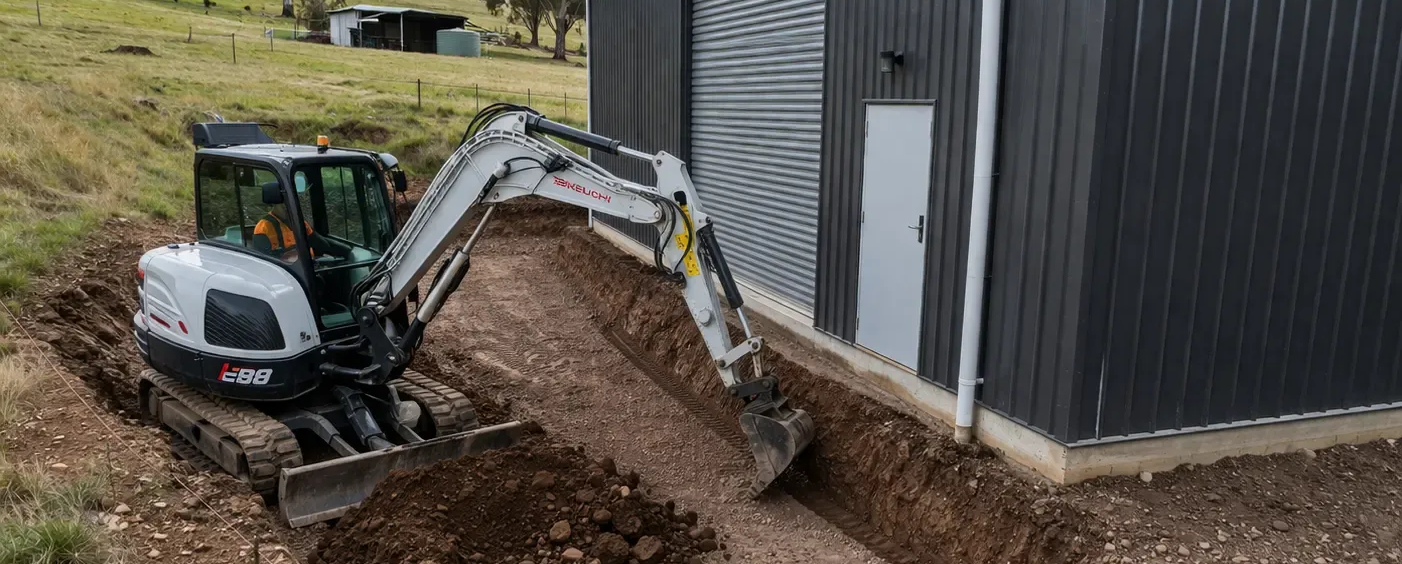
Subsoil and surface drainage around pads to protect slabs and manage runoff properly.
Rural & Acreage Drainage
Long runs, open ground, natural fall — practical drainage solutions suited to larger properties.
Spoon Drains & Surface Flow
Shaping and trenching to guide surface water without overcomplicating the job.
Trenching for Retaining & Edges
Footing trenches and drainage behind retaining walls to prevent pressure and water build-up.
Clean Trenches - Correct Fall - No Guesswork
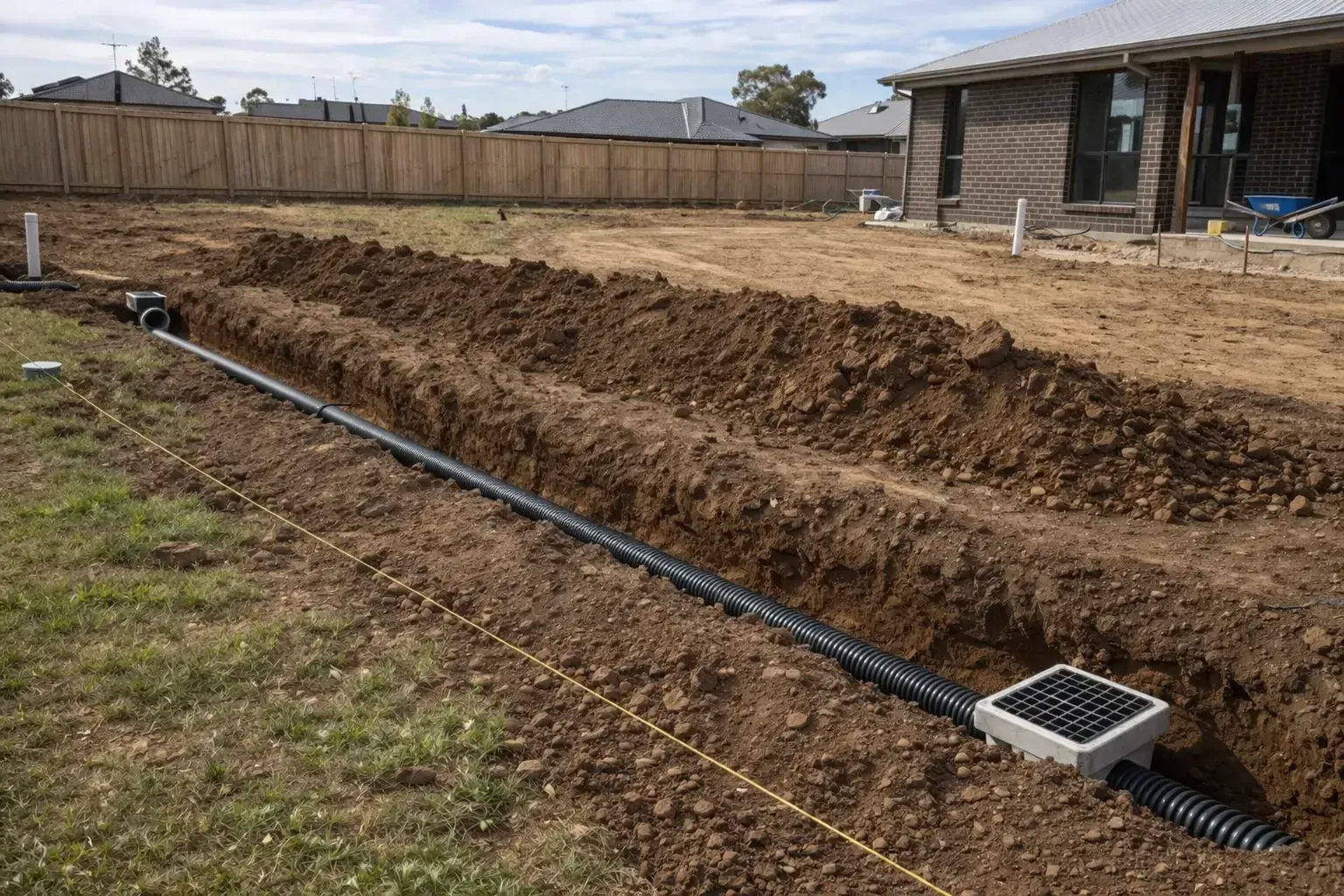
Good drainage isn’t complicated — but it does need to be done properly.
Wherever you are across the Toowoomba region, the story remains the same. You'll want consistent fall, the right depth, clean trench lines, and attention to how everything ties into the rest of the site.
Whether it’s a short service trench or a full stormwater run, the goal is the same:
We ensure water flows where it should!
Examples of Effective Drainage Placement
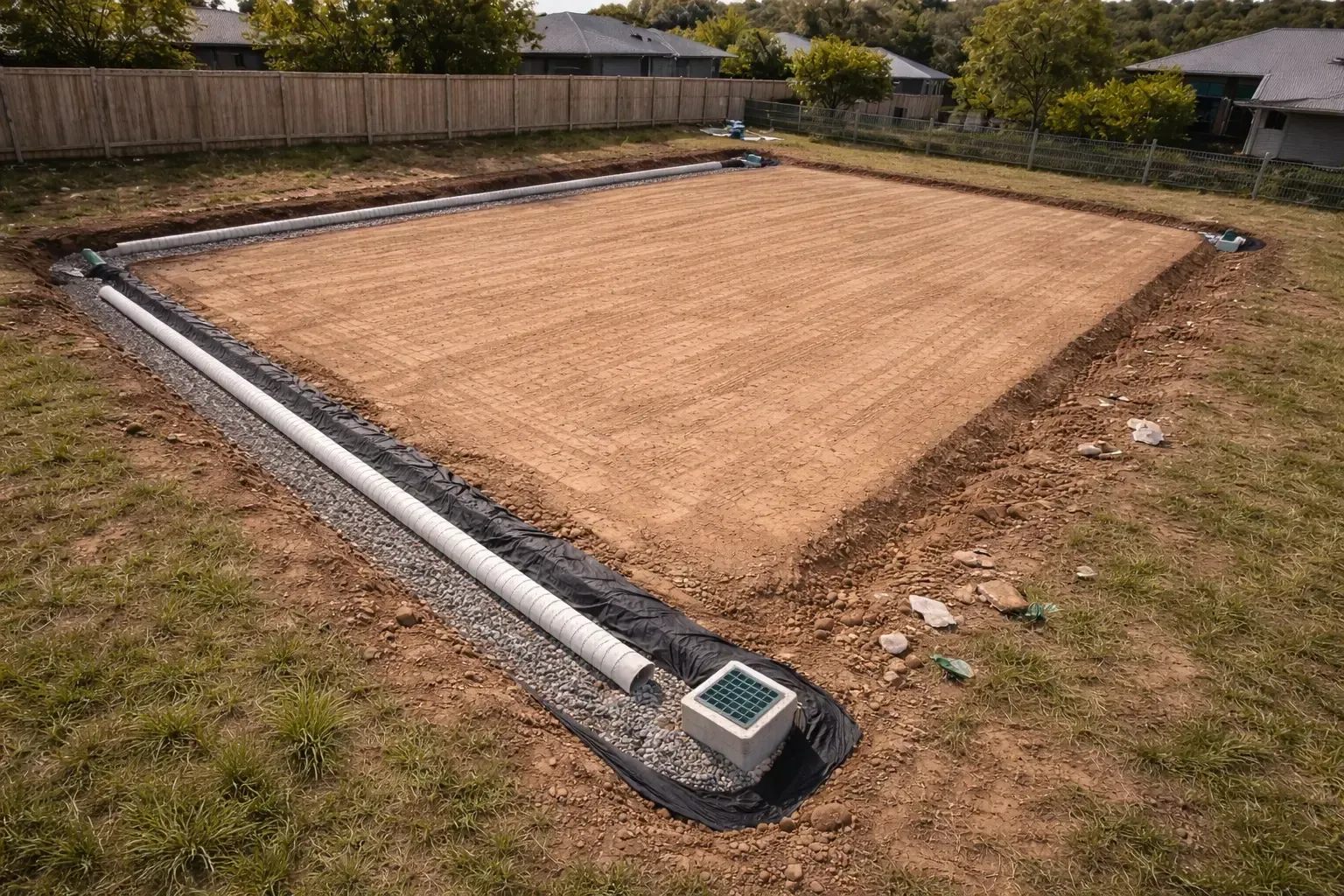
Water sitting around a slab is one of the quickest ways to create long-term issues.
We trench and shape around pads so runoff is directed away — not trapped.
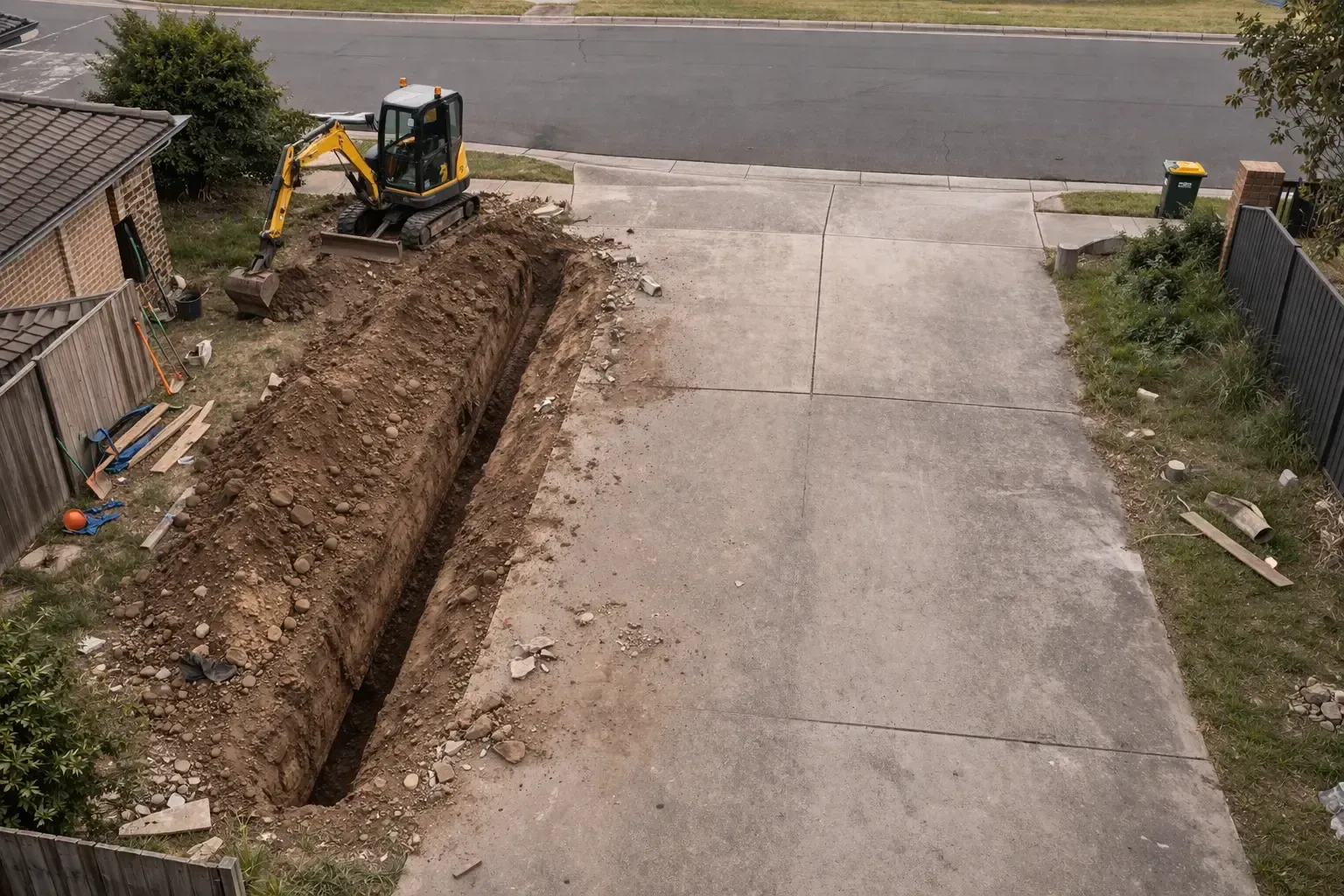
Driveways cop a lot — especially in heavy rain.
Proper drainage alongside or beneath prevents washouts, edge erosion, and water tracking.
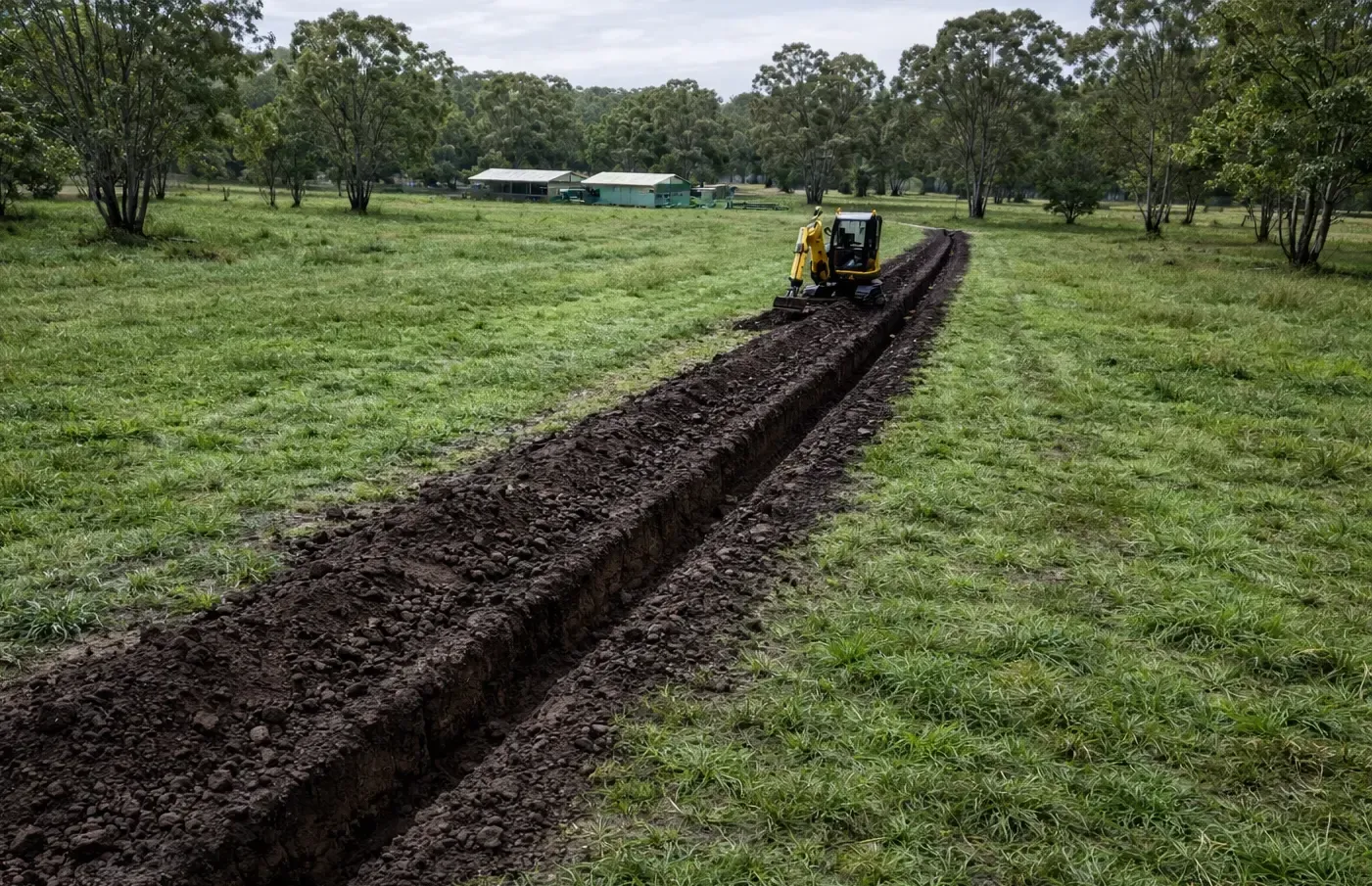
On acreage, it’s less about pipes everywhere and more about working with the land.
We use fall, positioning, and practical trenching to move water efficiently across the block.
No Overbuilt Systems. No Shortcuts Either
Not every job needs ag pipe everywhere and 10 different pits — and not every job can get away with a quick trench and hope for the best.
We look at the site, the fall, and how water actually moves — then put in a system that makes sense for that block.
Simple where it can be. Complex where it needs to be.
Our Simple Drainage Planning Process
1. Site Read
We look at slope, runoff, and where water is naturally heading.
2. Plan the Run
Set out trench lines, depths, and discharge points.
3. Trenching
Clean, controlled excavation with consistent depth and fall.
4. Install / Prep
We look at slope, runoff, and where water is naturally heading.
5. Backfill & Finish
We look at slope, runoff, and where water is naturally heading.
Trenching & Drainage FAQ's
Do I actually need drainage on my block?
If water sits, runs toward your build area, or cuts through access points — yes. Most sites benefit from at least basic drainage planning.
Can you trench for services as well?
Yes — electrical, plumbing, and general service trenches can all be handled at the same time as drainage work.
Do you install the pipes as well?
We can trench and prepare for install, or complete the full trench + pipework depending on the job.
How deep do trenches need to be?
It depends on the application — services, stormwater, and drainage all have different requirements. We trench to suit the job, not a fixed depth.
Can this be done before the house build starts?
That’s usually the best time. Getting drainage sorted early avoids rework later.