Shed Pads & Rural Building Pad Preparation Toowoomba
Built right from the ground up — solid, level pads for sheds, workshops, machinery storage, and
rural builds across Toowoomba & the Darling Downs.
Not Just a Flat Pad — It’s What Everything Sits On
A shed pad might look simple once it’s done — clean, level, ready to build on.
But getting it right is where most of the work is.
Out here across the Downs, you’re dealing with fall, drainage, variable soils, access constraints, and how that pad ties into everything else on the property — driveways, water flow, existing buildings.
We don’t just scrape an area flat and call it done.
We shape the site properly so the pad works long-term — not just the day the shed goes up.
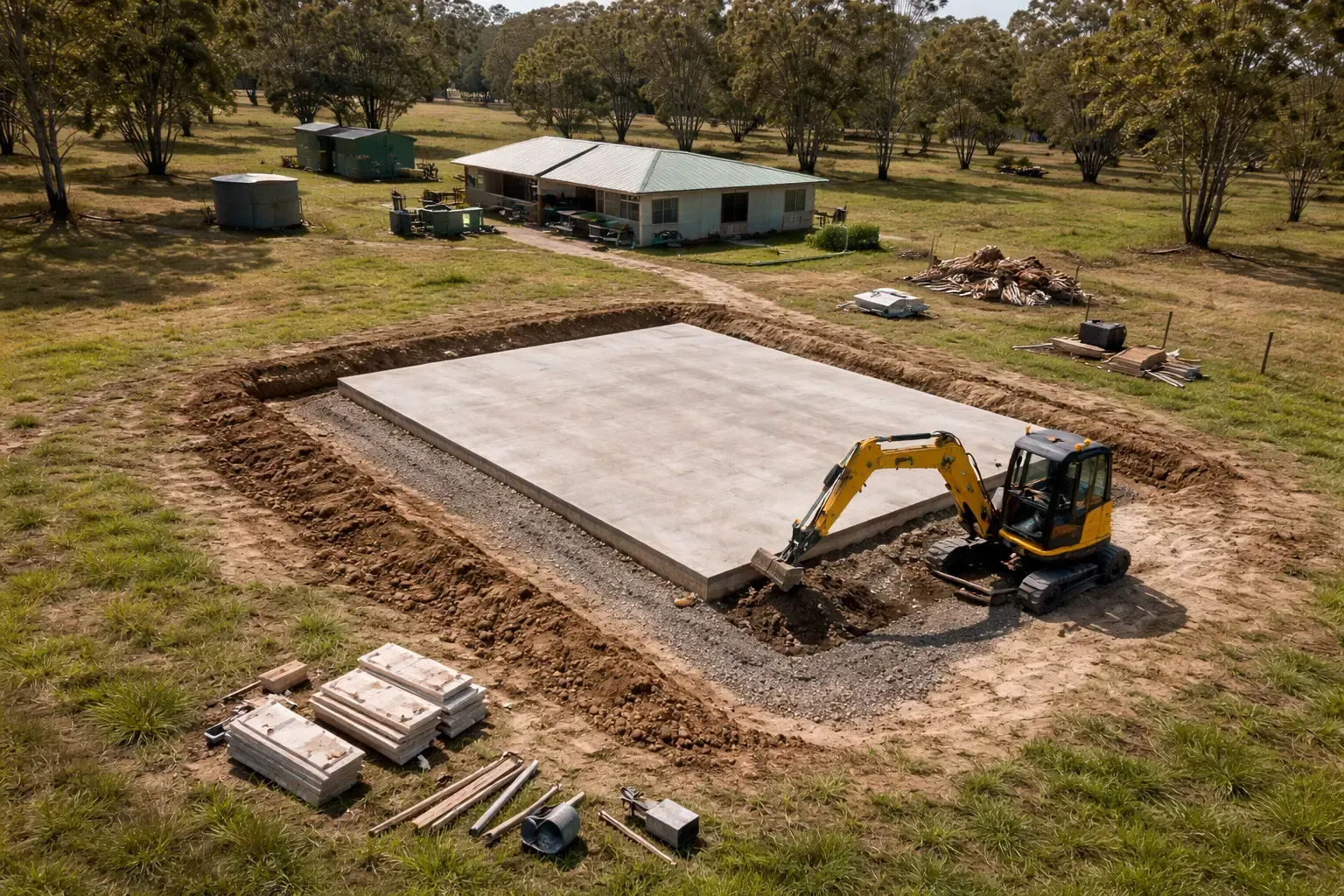
How a Proper Pad Comes Together
Strip & Set Levels
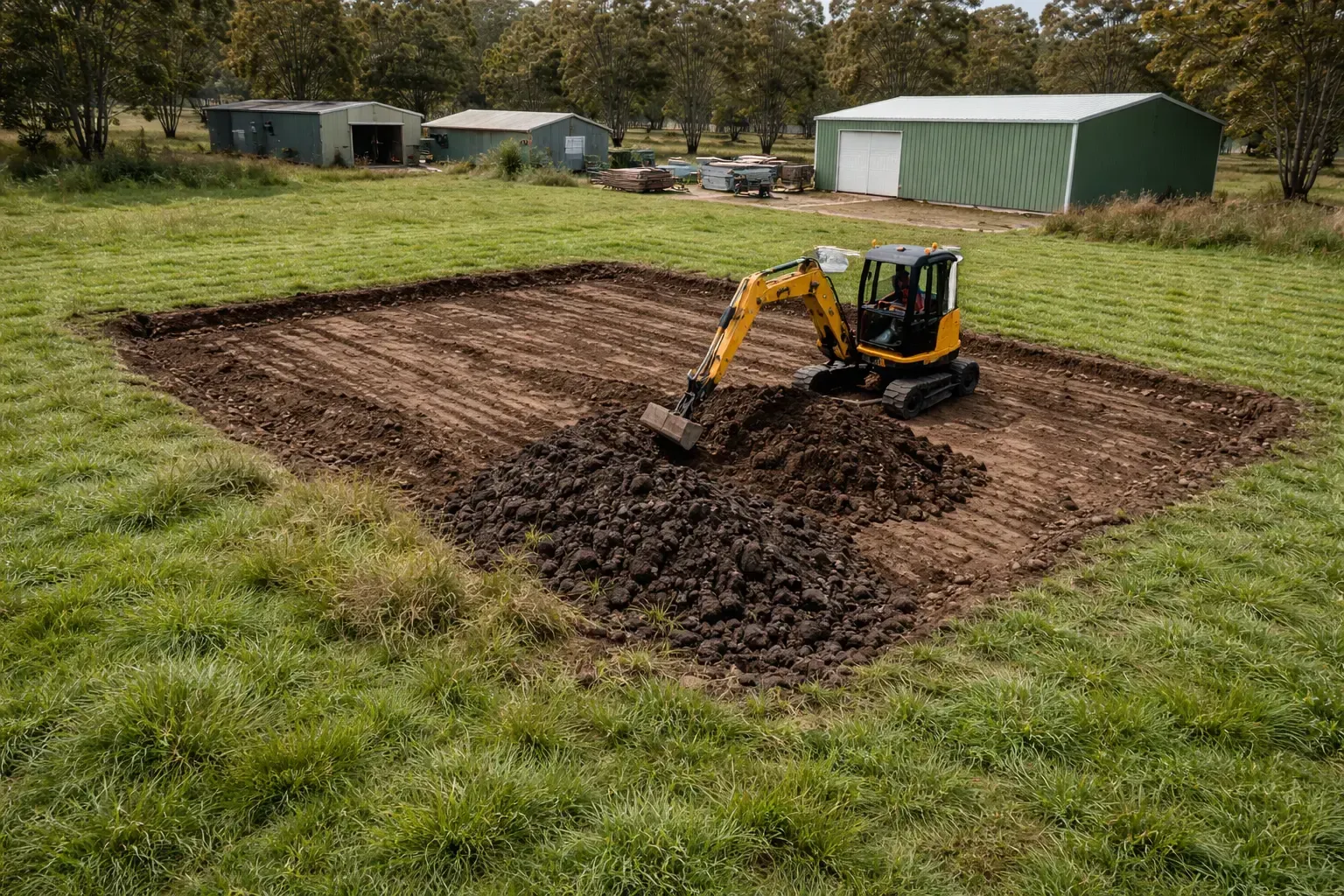
Topsoil comes off first so we’re working with stable ground.
From there, levels are set based on fall, access, and how the shed will sit on the site — not just where it looks good.
Cut & Shape
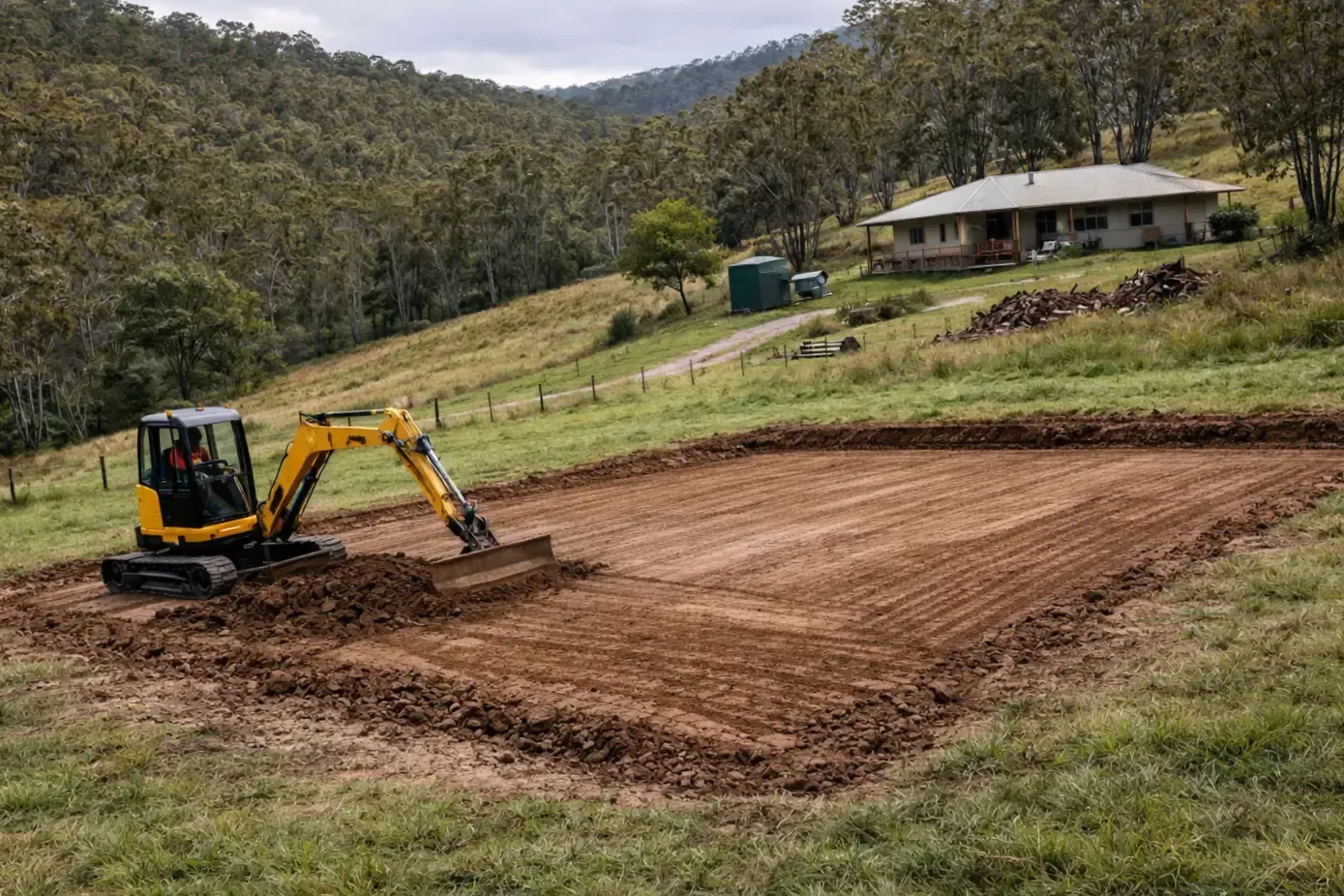
We cut into the high side and use that material where it makes sense.
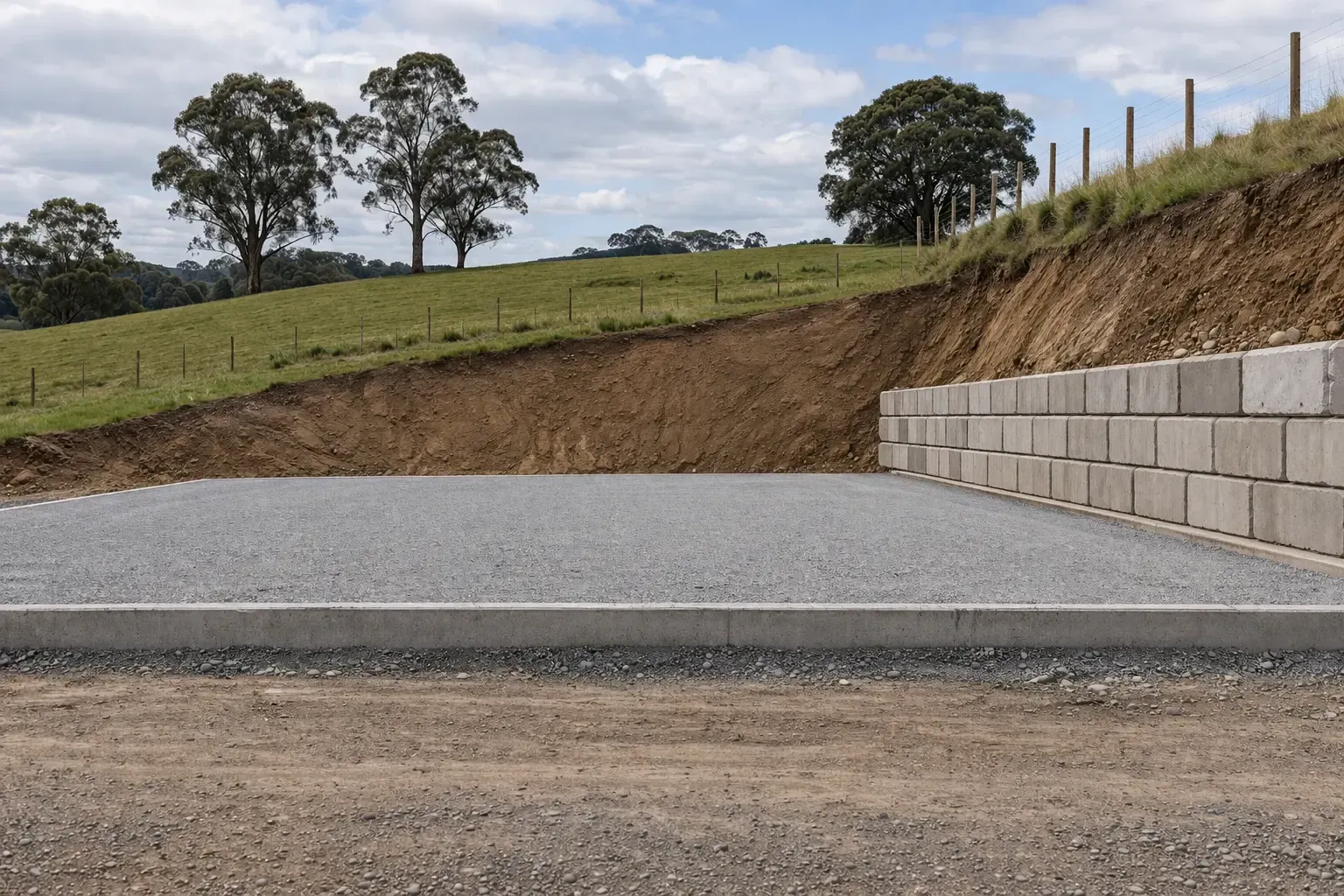
Pads are shaped to suit the block — not forced into a perfectly square box if the land doesn’t suit it.
Build Up & Trim
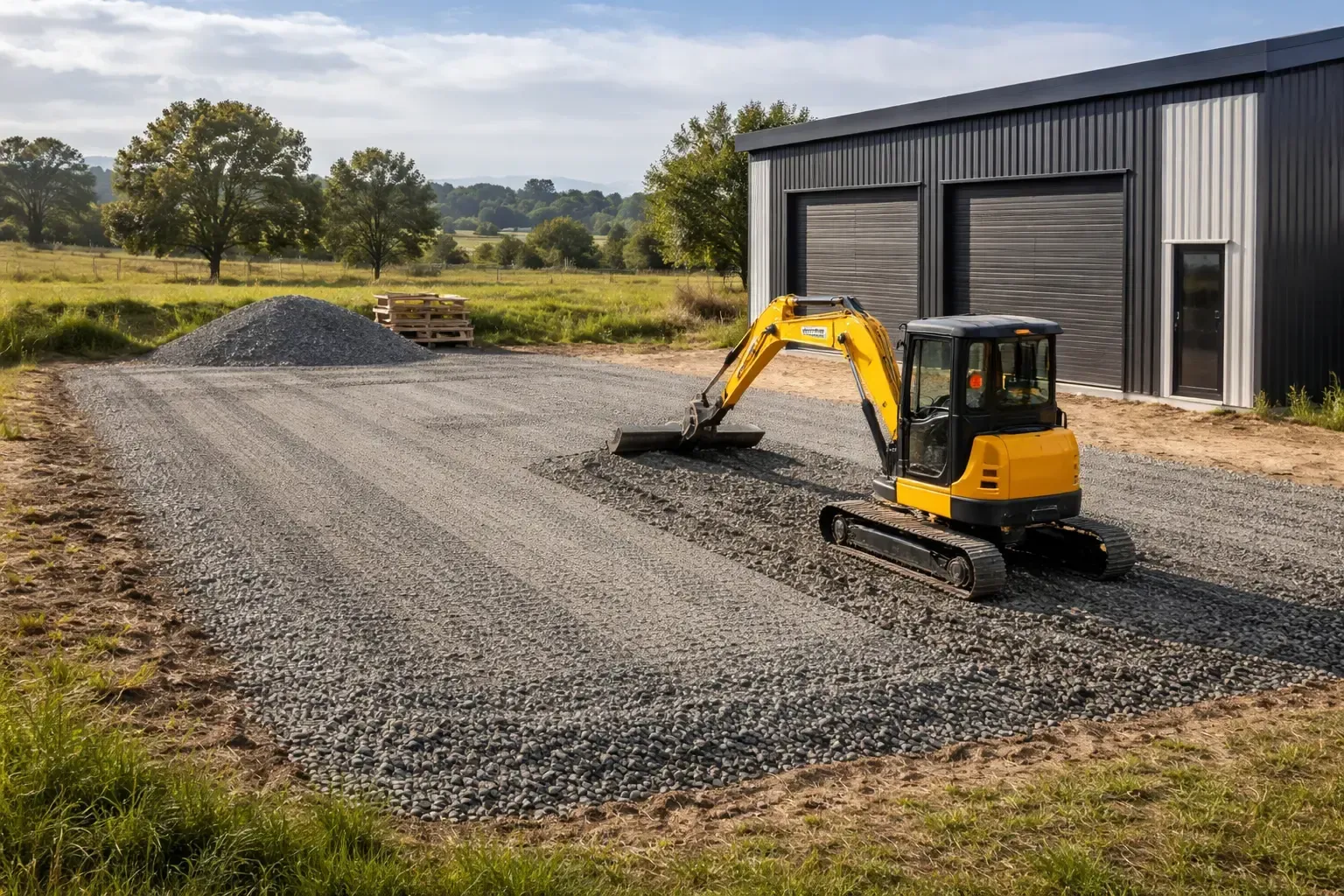
Low areas are brought up and trimmed off to create a clean, level, consistent surface ready for base or a concrete slab pour.
Drainage Consideration
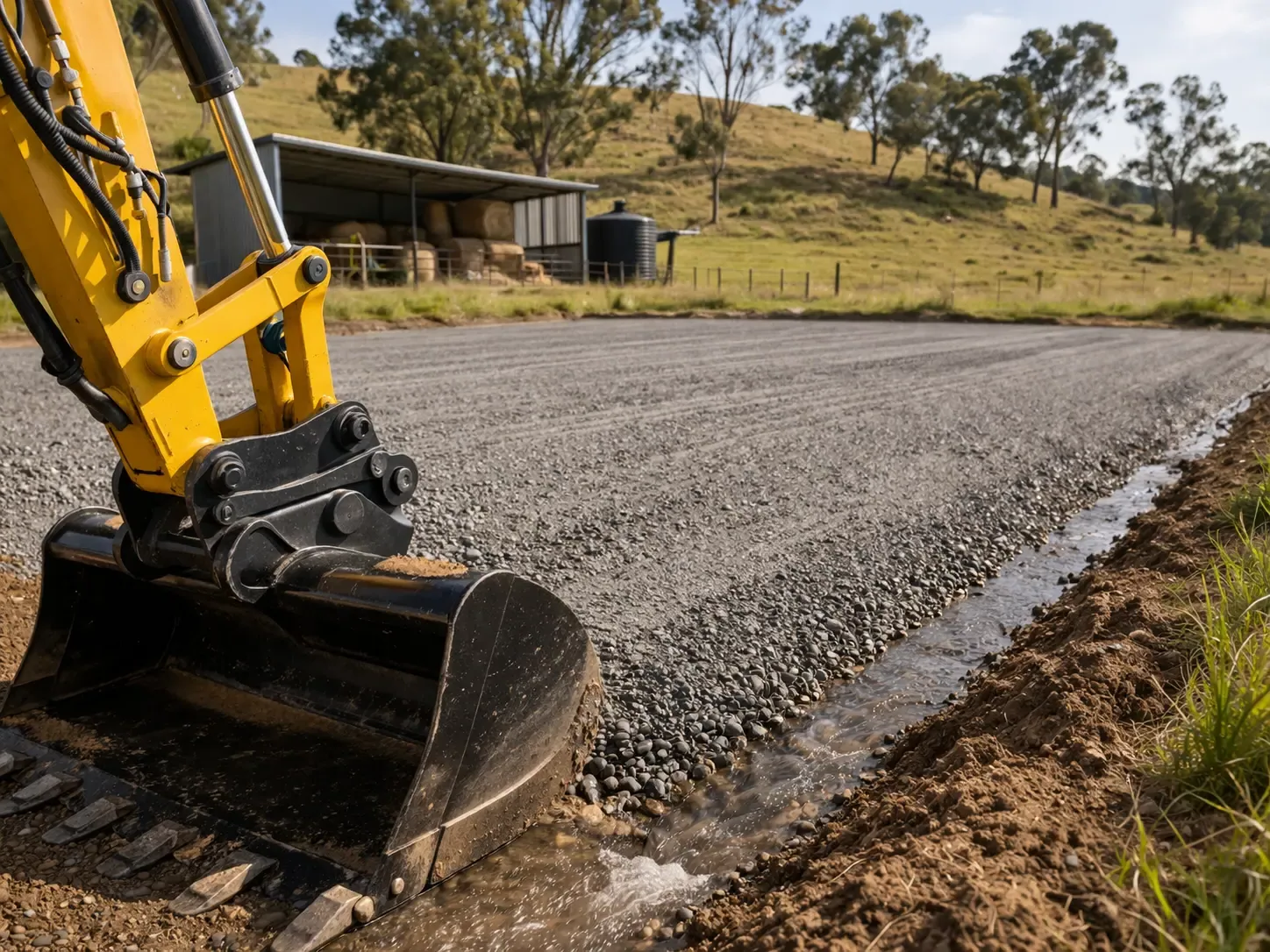
Water is always part of the plan.
We make sure runoff moves away from the pad — not toward it or underneath it.
Pads Built for Real Rural Use
Garages & Workshops
Clean, level pads ready for slab prep or direct build depending on your setup.
Barns & Rural/Farm Buildings
Pads that work with larger footprints and the natural fall of the land.
Gravel Hardstand Solutions
Parking, turning areas, or equipment storage around sheds and yards.
Multi-purpose Pads for Future Builds
Even if you’re not building yet — getting the pad right early can save a lot later.
Where Pads Go Wrong
Most issues don’t show up straight away.
They show up after rain, after a season change, or once weight gets put on the pad.
- Pads that aren’t cut properly into the block can shift or settle
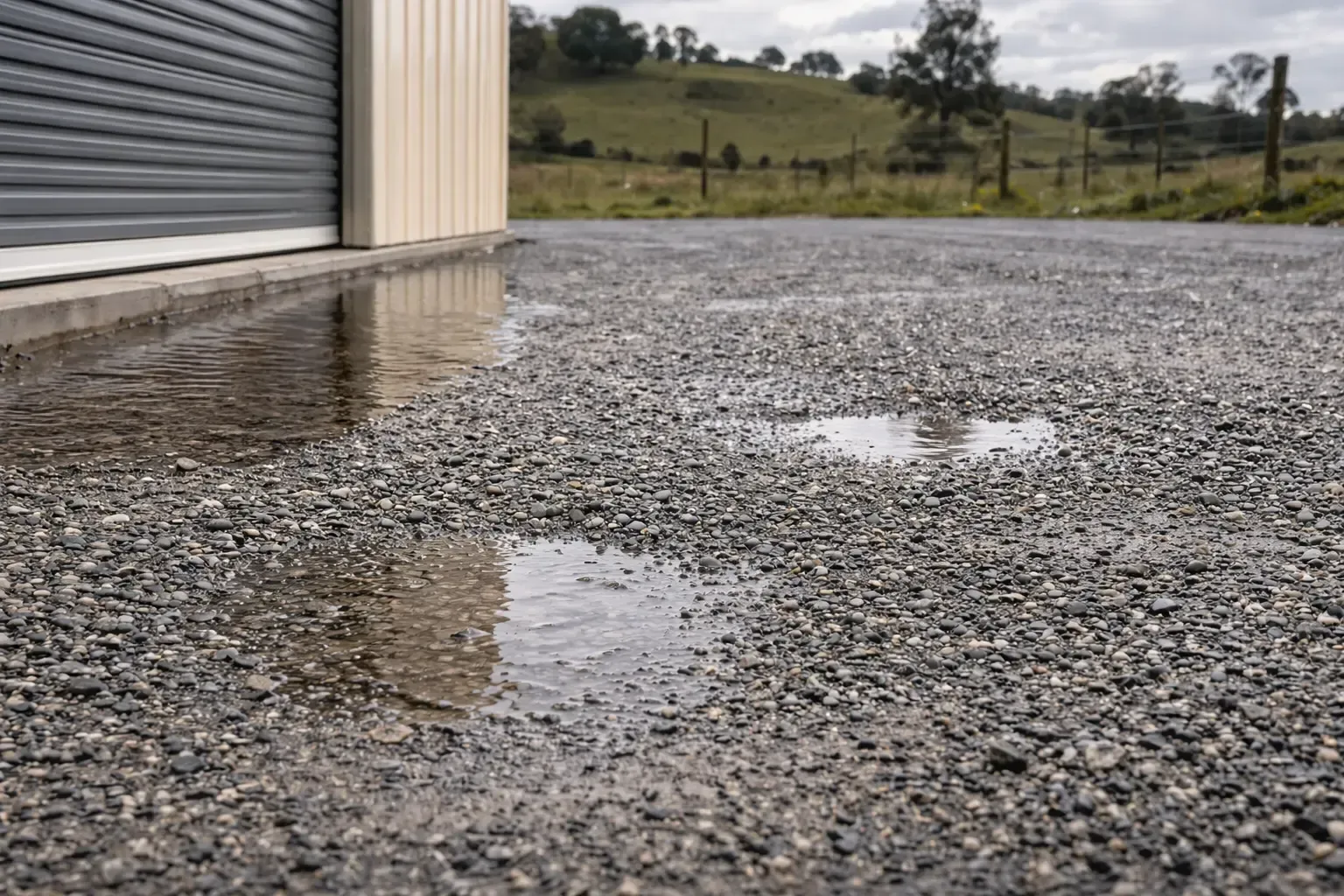
- Pads without drainage planning end up holding water
- Pads that sit too low can turn into a problem the moment you get a decent downpour.
We’ve seen it plenty of times — and most of it comes down to shortcuts early on.
"Getting it right the first time avoids rework later"
Built for Downs Conditions — Not Guesswork
Working across Toowoomba and the wider Darling Downs means dealing with reactive soils, slope, and unpredictable rainfall.
Pads here need to handle more than just weight — they need to handle movement and water.
That’s factored in from the start.
Every Pad Is Different
Same end goal — completely different approach depending on the block.
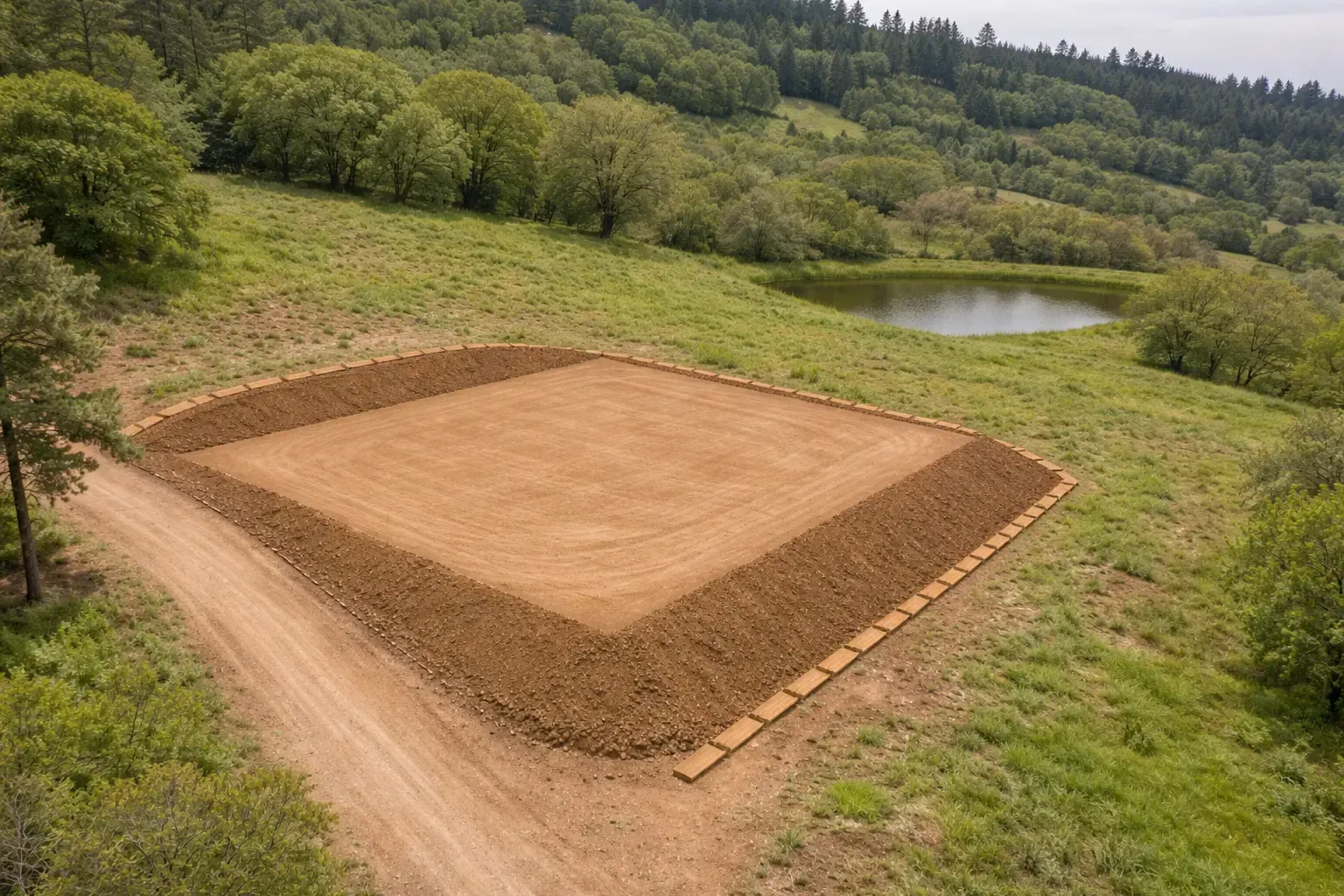
It’s Not Just the Pad — It’s How You Get To it
A good pad works with the rest of the site.
That means thinking about how vehicles access it, where water runs during heavy rain, and how it connects to driveways or tracks.
We look at the full picture — not just the rectangle the shed sits on.
Because once everything’s built, changing it gets a lot harder.
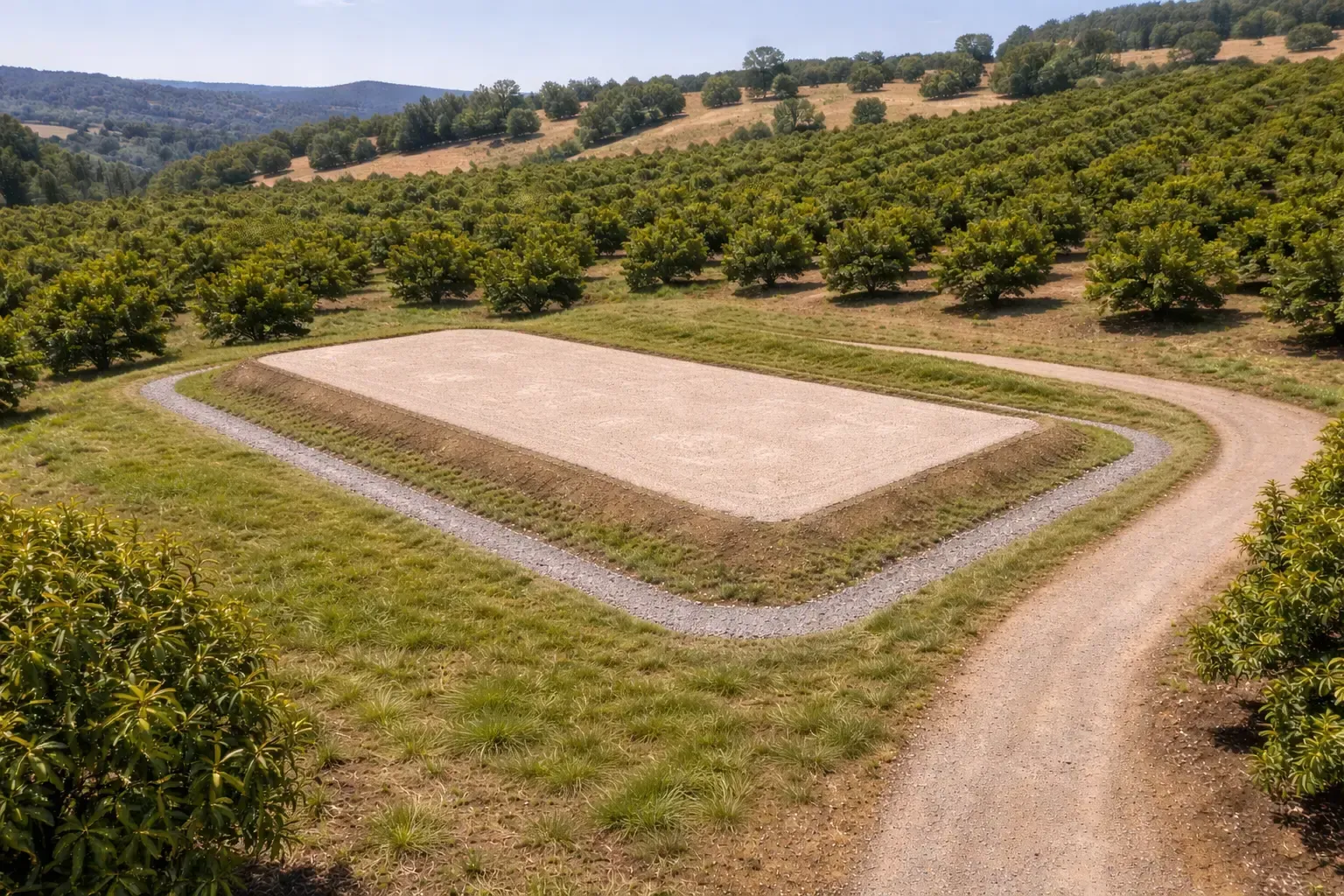
Shed Pad Questions
Do I need a perfectly level pad?
Not always. Some sites benefit from slight fall for drainage — it depends on the build and location.
Can you prepare the pad ready for a concrete slab?
Yes — we can cut and trim the pad to the right levels so it’s ready for the next stage.
What if my block is sloped?
That’s normal around here. Pads are cut into the slope and shaped to suit the land.
Do you use cut material or bring in fill?
Where possible, we use what’s on-site. If additional material is needed, we’ll factor that in.
How long does a pad take?
Most are done within a day or two depending on size, access, and conditions.
Planning a Shed or Rural Build?
Start with the pad — everything else depends on it.
We’ll take a look at your block, talk through what you’re planning, and get it set up properly from the start.